← back to the catalogue
PR
› reshelve this entry
See something off? The librarian reads these on Sundays. Wrong cover, wrong details, a duplicate of another entry — let us know and we’ll sort it.
Author file · 10281
Philip Roth
1933–2018
On Philip Roth
A brief life
Born in Newark, New Jersey, in 1933, Philip Roth was raised in a middle-class Jewish family that would become the primary laboratory for his fiction. After graduating from Bucknell University and serving in the U.S. Army, he earned an M.A. from the University of Chicago, where he began to hone his distinctive, aggressive prose style. He spent the majority of his career in New York City and rural Connecticut, teaching intermittently while maintaining a prolific output that spanned over five decades.
On the page
Roth’s bibliography is defined by a relentless interrogation of the American Jewish experience, masculine identity, and the porous boundary between autobiography and invention. His breakthrough came with the novella Goodbye, Columbus, followed by the scandalous, career-defining success of Portnoy's Complaint. His later work, including the American Trilogy—American Pastoral, I Married a Communist, and The Human Stain—shifted toward a broader, more elegiac examination of 20th-century American history.
In their time
Early in his career, Roth faced intense backlash from segments of the Jewish community who accused him of antisemitism and self-hatred for his frank depictions of Jewish life. Despite these controversies, he was consistently lauded by critics as one of the most vital stylists of his generation. He received nearly every major American literary award, including the Pulitzer Prize and three PEN/Faulkner Awards, though the Nobel Prize remained a notable omission.
The afterlife
Roth is now regarded as a central pillar of the American canon, comparable to his idols Saul Bellow and Henry James. His work continues to be studied for its technical mastery of voice, its unflinching confrontation with mortality, and its sophisticated play with the reliability of the narrator. He remains the definitive chronicler of the post-war American psyche, with his influence evident in a generation of writers who grapple with the intersection of the personal and the political.
Works in the catalogue · 5 entered
On the shelves
no plate
Our Gang
raretomes
Our Gang
1 copy on offer
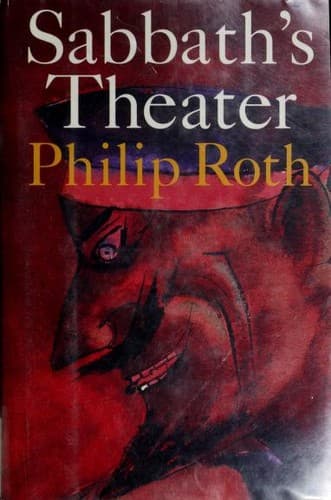
Sabbath's Theater
1 copy on offer
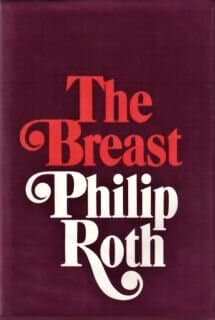
The Breast
1 copy on offer
Preoccupied with
Recurring motifs



In conversation with