← back to the catalogue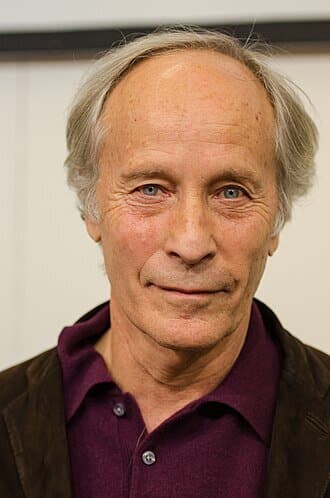
› reshelve this entry
See something off? The librarian reads these on Sundays. Wrong cover, wrong details, a duplicate of another entry — let us know and we’ll sort it.
Author file · 02650
Richard Ford
1944–
On Richard Ford
A brief life
Richard Ford was born in 1944 in Jackson, Mississippi, and spent his formative years traveling between the American South and the Midwest. After abandoning a brief pursuit of law, he turned to creative writing, eventually establishing himself as a preeminent voice of the American suburban experience. He has held numerous prestigious teaching positions, including roles at Princeton and Columbia, while maintaining a nomadic lifestyle that informs his restless, observant prose.
On the page
Ford is best known for his 'Basque' series, beginning with The Sportswriter and culminating in the Pulitzer Prize-winning Independence Day. His work centers on the interior lives of middle-aged men navigating divorce, professional transition, and the quiet malaise of the American landscape. His prose is characterized by a precise, detached lyricism that elevates the mundane details of daily existence into profound existential inquiry.
In their time
Upon the publication of The Sportswriter, Ford was immediately hailed as a master of contemporary realism, drawing comparisons to the works of John Updike and Raymond Carver. While his early novels received critical acclaim, his later works, particularly the Frank Bascombe cycle, solidified his reputation as a chronicler of the American national character. He has been awarded the Pulitzer Prize and the PEN/Faulkner Award, cementing his status as a literary heavyweight.
The afterlife
Ford’s influence persists in the development of the modern American novel of manners, where the focus remains on the psychological weight of domestic stability. His ability to capture the specific texture of suburban life has made him a touchstone for subsequent generations of writers exploring the intersections of geography and identity. His work remains a staple of the contemporary canon, frequently cited for its unflinching examination of masculine vulnerability.
Works in the catalogue · 2 entered
On the shelves
Preoccupied with
Recurring motifs



In conversation with