← back to the catalogue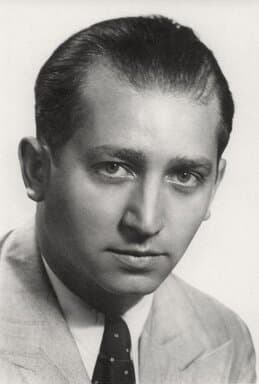
› reshelve this entry
See something off? The librarian reads these on Sundays. Wrong cover, wrong details, a duplicate of another entry — let us know and we’ll sort it.
Author file · 09931
Mihail Sebastian
1907–1945
On Mihail Sebastian
A brief life
Mihail Sebastian was born in 1907 in Brăila, Romania, and died in 1945 in Bucharest, struck by a truck in the final months of the Second World War. He studied law in Bucharest and Paris, and moved through the interwar literary circles of the Romanian capital, counting Mircea Eliade and Emil Cioran among his early friends. The rise of fascism and the anti-Semitic laws that stripped him of his rights and livelihood shadowed his final decade, a period he chronicled in a diary that remained unpublished for half a century.
On the page
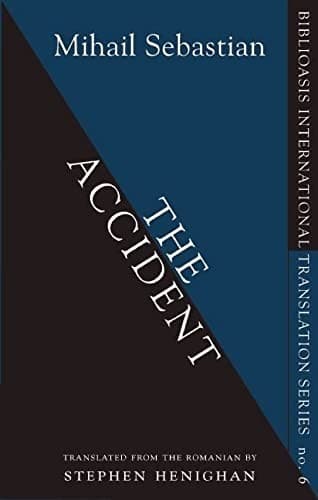
Sebastian is best known for his novel For Two Thousand Years (1934), a semi-autobiographical account of a Jewish intellectual's struggle to belong in an increasingly hostile Romania, and for The Accident (1940), a taut, melancholic love story set against the gathering political storm. He also wrote plays—most notably The Star Without a Name (1944), a delicate comedy of romantic delusion—and a body of journalism and literary criticism. His work is marked by a quiet, lucid despair, an obsession with the fragility of human connection, and the persistent, unanswerable question of how to live when history has already condemned you.
In their time
For Two Thousand Years provoked immediate scandal in Romania, attacked by the far right for its 'defeatism' and by some Jewish critics for its refusal to adopt a more militant stance. His plays were performed successfully in Bucharest and later in translation across Europe, but his literary reputation was eclipsed by his death and by the Communist takeover that followed. The posthumous publication of his Journal 1935–1944 in 1996—a harrowing, day-by-day account of survival under the Antonescu regime—brought him a new international readership and was hailed as a masterpiece of moral testimony.
The afterlife
Sebastian now stands as a crucial voice of Central European Jewish modernism, often compared to Joseph Roth and Stefan Zweig for his blend of irony and elegy. His Journal is taught alongside Anne Frank's diary and Primo Levi's testimony as a document of the Holocaust's slow, bureaucratic horror. English translations of his fiction and diary have appeared steadily since the 1990s, and his work continues to be rediscovered by readers drawn to the literature of exile, belonging, and the moral life under duress.
Works in the catalogue · 1 entered
On the shelves
1 copy on offer
In conversation with