no plate
Summer Rain
raretomes
Books from independent sellers worldwide
See something off? The librarian reads these on Sundays. Wrong cover, wrong details, a duplicate of another entry — let us know and we’ll sort it.
Author file · 09466
1914–1996
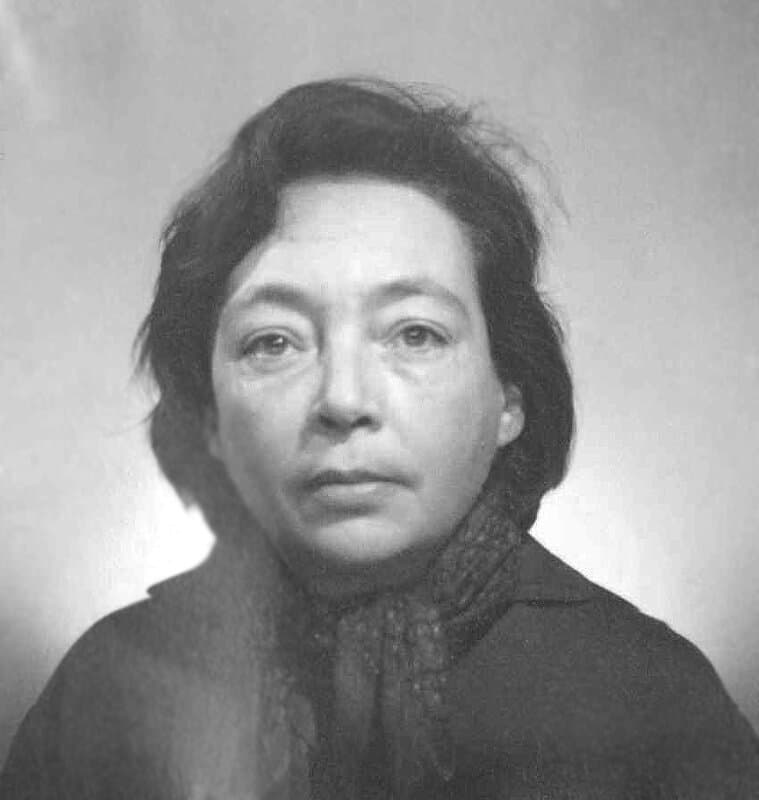
On Marguerite Duras
A brief life
Born Marguerite Donnadieu in 1914 near Saigon, French Indochina, Duras spent her youth in Vietnam, a landscape of heat, river deltas, and colonial poverty that seeps into every page of her work. She moved to Paris in the 1930s, joined the Resistance during the Occupation, and after the war became one of the most audacious figures of the French literary left bank. Her life was a public performance of desire, alcoholism, and political commitment, ended by cancer in 1996.
On the page
Duras wrote novels, plays, and screenplays with a compressed, hypnotic, almost abstracted prose — the best-known is The Lover (1984), a sparse, lyrical memoir of an affair between a fifteen-year-old French girl and a wealthy Chinese man in Saigon. Earlier novels such as The Sea Wall (1950) and Moderato Cantabile (1958) already ache with erotic tension, failed love, and colonial aftermath. She directed the film India Song (1975) and wrote the screenplay for Hiroshima Mon Amour (1959), which she is sometimes said to have authored as much as Resnais directed: her signature is a voice that floats over images, repeating, circling, refusing to arrive.
In their time
An icon of the nouveau roman for a season, Duras was embraced by French intellectuals and awarded the Prix Goncourt in 1984 for The Lover, which sold millions. Critics abroad often found her opaque or self-indulgent, but the English translations—especially by Barbara Bray—won a devoted, persistent readership. In her later years, the drinking, the public quarrels, the theatrical interviews made her a scandalous celebrity rather than a merely academic one.
The afterlife
Duras's innovating prose—the deliberate flatness, the broken temporalities, the voice that sounds like memory itself—influenced writers as different as Deborah Levy, Rachel Cusk, and Lydia Davis. The Lover remains a staple on every English-language bookshop shelf, and her collected works have been steadily reissued; the Anglophone reader discovers her as the great poet of impossible love and the unbearable nearness of the past.
Works in the catalogue · 1 entered
Summer Rain
1 copy on offer
Preoccupied with
In conversation with