← back to the catalogue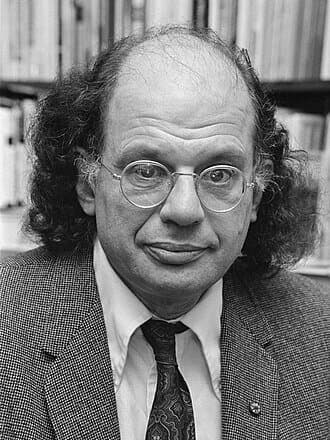
› reshelve this entry
See something off? The librarian reads these on Sundays. Wrong cover, wrong details, a duplicate of another entry — let us know and we’ll sort it.
Author file · 09117
Allen Ginsberg
1926–1997
On Allen Ginsberg
A brief life
Allen Ginsberg was born in 1926 in Newark, New Jersey, and raised in Paterson. He attended Columbia University, where he met William S. Burroughs and Jack Kerouac, forming the nucleus of the Beat Generation. His life was defined by his radical politics, his public advocacy for gay rights, and his lifelong engagement with Buddhist practice.
On the page
Ginsberg’s seminal collection, Howl and Other Poems, revolutionized American verse with its long, breath-based lines and raw, confessional intensity. His later works, such as Kaddish and The Fall of America, expanded his scope to include elegiac meditations on his mother and sprawling critiques of American imperialism. His writing is characterized by a fusion of prophetic vision, colloquial rhythm, and an unflinching exploration of the counterculture.
In their time
The 1957 obscenity trial for Howl brought Ginsberg national notoriety, effectively cementing his status as a countercultural icon. While conservative critics initially dismissed his work as incoherent or vulgar, the literary establishment eventually recognized his profound influence on the trajectory of modern American poetry. He was elected to the American Academy of Arts and Letters in 1993.
The afterlife
Ginsberg remains the definitive voice of the Beat movement and a primary architect of the confessional and performance-poetry traditions. His work paved the way for subsequent generations of poets to integrate political activism and personal liberation into the poetic form. His archives at Stanford University and his enduring presence in anthologies ensure his position as a central figure in 20th-century literature.
2 volumes cataloguedWikipedia ↗
Works in the catalogue · 2 entered
On the shelves
1 copy on offer
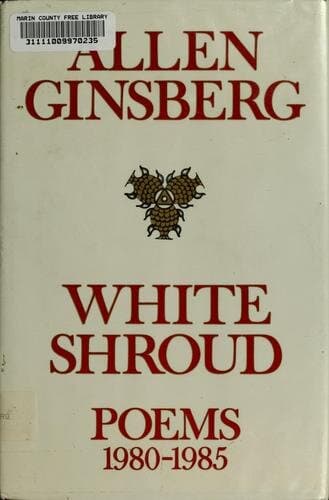
White Shroud: Poems, 1980-1985
1 copy on offer
Preoccupied with
Recurring motifs



In conversation with