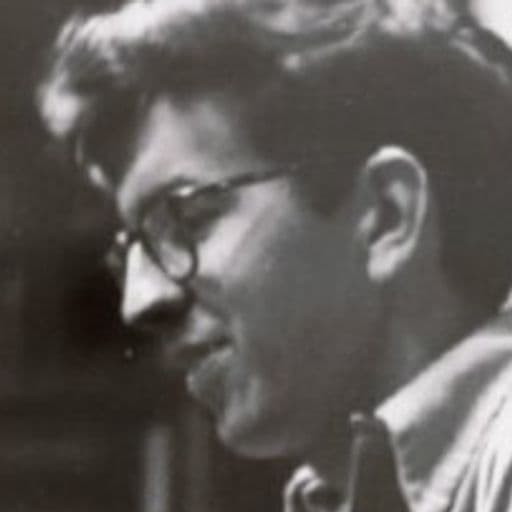
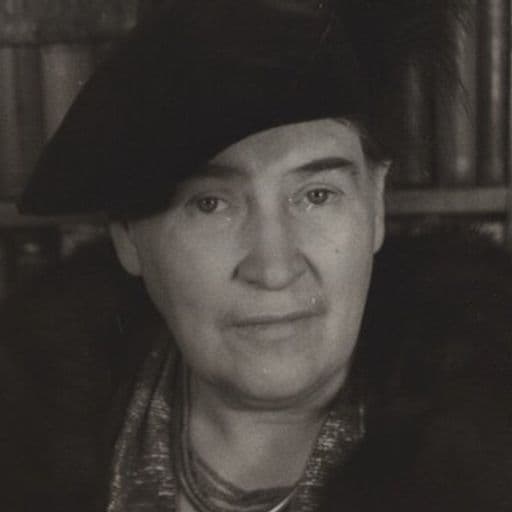
no plate
Collected Stories of Wallace Stegner
raretomes
Books from independent sellers worldwide
See something off? The librarian reads these on Sundays. Wrong cover, wrong details, a duplicate of another entry — let us know and we’ll sort it.
Author file · 11239
1909–1993
On Wallace Stegner
A brief life
Born in 1909 in Lake Mills, Iowa, Wallace Stegner spent a nomadic childhood across the American West, an experience that profoundly shaped his perspective on the frontier. He eventually settled in California, where he founded the prestigious Stanford Creative Writing Program and mentored generations of American novelists. He passed away in 1993, leaving behind a body of work that defined the literary identity of the American West.
On the page
Stegner’s bibliography is anchored by Pulitzer Prize-winning 'Angle of Repose' and the National Book Award-winning 'The Spectator Bird'. His writing is characterized by a meticulous attention to landscape, the tension between individual autonomy and community, and the slow, often painful erosion of pioneer ideals. He balanced his fiction with rigorous historical non-fiction, most notably 'Beyond the Hundredth Meridian', which chronicled the life of explorer John Wesley Powell.
In their time
During his lifetime, Stegner was widely regarded as the 'dean of Western writers,' though he occasionally faced criticism from regionalists who felt his academic background distanced him from the raw reality of the frontier. His work received consistent critical acclaim for its prose style and moral clarity, even as he resisted the label of 'regionalist' to insist on the universal significance of Western themes. He was a fixture of the mid-century American literary establishment, respected as much for his teaching as for his novels.
The afterlife
Stegner remains a foundational figure in the literature of the American West, credited with elevating the genre from pulp fiction to serious, contemplative art. His influence is visible in the work of contemporary writers who grapple with environmental conservation, family history, and the myth of the American dream. He is remembered as a voice of conscience, whose books continue to serve as essential texts for understanding the transformation of the American landscape.
Works in the catalogue · 2 entered
Preoccupied with
In conversation with