no plate
Anti-Oedipus
raretomes
Books from independent sellers worldwide
See something off? The librarian reads these on Sundays. Wrong cover, wrong details, a duplicate of another entry — let us know and we’ll sort it.
Author file · 10095
1926–1984
On M. Foucault
A brief life
Michel Foucault was born in 1926 in Poitiers, France, and spent his formative years navigating the intellectual hierarchies of the École Normale Supérieure. His career was marked by a restless movement between academic appointments in France, Sweden, Poland, and Tunisia, alongside a profound engagement with the political upheavals of the late 1960s. He died in Paris in 1984, leaving behind a body of work that fundamentally altered the landscape of the humanities.
On the page
Foucault’s bibliography is defined by a rigorous archaeological and genealogical approach to the history of ideas. Major works such as Madness and Civilization, The Birth of the Clinic, and The History of Sexuality examine the mechanisms of power, knowledge, and the construction of the subject. His writing is characterized by a dense, analytical style that dissects the institutional structures of prisons, hospitals, and schools.
In their time
During his lifetime, Foucault was a polarizing figure, celebrated as a radical visionary by many in the academy while simultaneously criticized for his perceived historical inaccuracies and dense prose. His lectures at the Collège de France were legendary, drawing massive crowds that spanned students, activists, and intellectuals. Despite the controversy surrounding his methodology, he achieved international status as one of the most influential thinkers of the twentieth century.
The afterlife
Foucault’s influence is pervasive, extending far beyond philosophy into sociology, literary theory, gender studies, and political science. His concepts of panopticism, biopower, and discourse remain essential tools for analyzing modern surveillance and institutional control. His work continues to be widely translated and serves as a foundational reference point for any critique of modern power structures.
Works in the catalogue · 3 entered
Anti-Oedipus
1 copy on offer

1 copy on offer
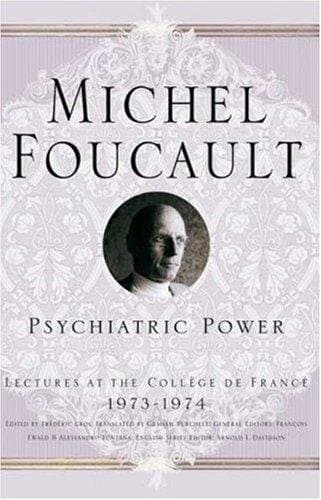
1 copy on offer
Preoccupied with
In conversation with